
A growing number of nutrition researchers and doctors believe that Indian women have a widespread and largely unaddressed deficiency in one nutrient: omega-3 fatty acids. According to the Omega-3 World Map 2024, published in Progress in Lipid Research, a very few countries in the world have very low omega-3 levels (below 4%), and India is one of them. This is a finding drawn from data across 48 countries and over 3,40,000 people. The omega-3 supplements’ benefits for women are not just about one organ or one phase of life. They span from hormonal health to heart function, skin to mental well-being. And yet, omega-3 rarely makes it onto doctors’ regular prescriptions or even into everyday meals in India.
The consequences show up slowly, such as quickly ageing skin, irritable mood swings, dip in energy and erratic or painful menstrual cycle. Most women easily dismiss these signs as stress or age, without considering another explanation.
So, this article breaks down what healthcare experts know, what the clinical trials confirm, and what Indian women can practically do about it.
Why Women’s Bodies Have a Unique Relationship with Omega-3?
Women’s bodies are not simply smaller versions of men’s bodies. They work completely differently, especially when it comes to how fat is processed and used. And omega-3 sits right in the middle of that difference.
Women actually convert the plant-based omega-3 (ALA, found in flaxseed oil supplements) into the active forms EPA and DHA far more efficiently than men do. Oestrogen helps in this conversion. However, this is not an advantage because women’s bodies have more life stages that actively drain omega-3 stores when compared to men:
Menstruation: The monthly blood loss takes nutrients with it. Prostaglandins, compounds that trigger cramping, rely on omega-3s to stay balanced.
Pregnancy and breastfeeding: A developing baby draws DHA directly from the mother’s reserves for brain and eye development. If diet doesn’t replenish this, maternal stores can drop sharply.
Perimenopause and menopause: As oestrogen levels fall, the cardioprotective effect it provided goes with it. This is precisely when omega-3’s role in supporting heart and bone health becomes more critical.
The typical Indian diet makes everything worse. Most Indian households have plant and chicken-heavy meals. They do not eat fatty fish regularly either, which results in an ever-growing, but quiet negative impact that most women don’t realise until it’s too late.
Omega-3 Benefits for Women: What It Actually Does?
Forget the generic list of ‘good for heart and brain’ which you see on most omega-3 supplements’ labels. The omega-3 benefits for women in particular go deeper than that, and are more specific to how a woman’s body actually functions every day.
Balances Hormones and Relieves PMS
EPA is one of the two active omega-3 fatty acids. It directly regulates prostaglandin production. Prostaglandins are compounds that promote inflammation, and in excess, they are responsible for severe menstrual cramps, bloating, joint pain, tiredness, and mood swings. A study published in the European Journal of Clinical Nutrition found that women who took omega-3 supplements had less period pain than those who didn’t.
Improves Mood, Supports Mental Health, and Boosts Brain Function
Statistically, women are twice as likely as men to experience depression and anxiety. The WHO estimates that depression affects 5.7% of women globally, compared to 3.5% of men. EPA supports serotonin paths in the brain, and DHA makes up nearly 60% of the brain’s fat content, which explains why low omega-3 levels are constantly linked to poor mood, brain fog, and poor memory recall.
Improves Skin, Hair, and Cell Membrane Health
DHA keeps cell membranes flexible. When your skin and hair cells have enough DHA, they retain moisture and elasticity, respond to nutrients better, and resist oxidation, dullness, and irritation. Without enough omega-3, cell membranes easily become stiff, which shows up as dry, loose, patchy, pigmented, or acne-prone skin and brittle, lifeless hair. EPA also blocks inflammatory chemicals like cytokines that directly trigger eczema and redness.
Supports Heart Health After the Age of 35
Heart disease is now the leading cause of death among Indian women. It is responsible for one in 3 deaths, surpassing all types of cancers, too. This is because, after menopause, oestrogen rapidly drops, and with it goes its cardioprotective effect. Omega-3s step in here: EPA and DHA lower triglyceride levels, keep arterial walls flexible, reduce blood pressure, and reduce low-grade inflammation in the cardiovascular system. neuherbs clinical trial on the Indian population confirms that omega-3s can reduce triglycerides by 10% to 20% and increase good cholesterol levels by 27%.
Bone Health and Vitamin D3 Synergy
Bone density in women drops sharply after they cross 40. Omega-3s work alongside Vitamin D3 to improve calcium absorption and reduce bone and cartilage loss. This combination is not just good for ageing but is protective during every stage of life after menopause.
Why Most Women Don’t Get Enough of Omega-3s?
Even women who eat well and take their health seriously tend to fall short on omega-3. There are a few clear reasons for this.
Fatty fish such as sardines, anchovies, salmon and mackerel are the primary dietary source of EPA and DHA. Most Indian households eat fish only occasionally, and cooking (frying especially) can degrade a portion of the omega-3 content. Vegetarian and vegan diets have no direct source of EPA or DHA at all.
There is also a broader dietary imbalance at play. Modern Indian diets, which are heavy in refined oils like sunflower and soybean, are high in omega-6 fatty acids. The average Indian diet has an omega-6 to omega-3 ratio of nearly 20:1. The healthy ideal is closer to 2:1 to 3:1. This skewed ratio promotes chronic, low-grade inflammation. This kind builds quietly for years before causing a visible health problem.
How to Choose the Best Omega-3 Supplements?
Knowing how to read product labels will help you spend your money on a supplement that actually helps. Here is what you must check when picking the best omega-3 supplements:
EPA and DHA Content Instead of Total Fish Oil
A bottle that says ‘1000 mg fish oil’ can contain anywhere from 200 mg to 700 mg of actual omega-3. 200mg will definitely not help you. So, always check the specific EPA and DHA values on the label. Women should target anywhere from 500mg to 1500mg of combined EPA and DHA per day. Those managing specific health conditions like high cholesterol or joint issues may need more, but ideally with a doctor’s guidance.
Omega-3 Source Quality
Deep-sea fish like sardines and anchovies are smaller, have shorter lifespans, and store fewer toxins than larger fish like tuna or shark. They also consistently yield more omega-3s. Similarly, organically grown flaxseeds and algae produce better results.
Purity and Processing
Look for fish oil supplements that are molecularly distilled. This gentle process removes heavy metals, PCBs, and other environmental contaminants without damaging the power of EPA and DHAs. If a brand does not mention this on the label or website, do not buy. When it comes to flaxseed oil capsules, look for the ones that are cold-pressed.
Added Nutrients
Nutrients like Vitamin D3 and Vitamin E can improve the efficacy of omega-3s. Vitamin D and omega-3 work synergistically on bone and heart health, while Vitamin E is a fat-soluble antioxidant that protects the omega-3 from oxidation, which means better shelf stability and better absorption.
Improves Palatability
Fishy burps are the number one reason people stop taking omega-3 supplements. Lemon-flavoured softgels eliminate this issue. If you have stopped a supplement before due to aftertaste, choose a brand that addresses this directly.
Certified and Third-Party Tested
FSSAI, ISO, and GMP are some of the certifications that guarantee the quality and purity of a product. Make sure the FSSAI number is mentioned on the product page or label. Any other certification is a bonus point.
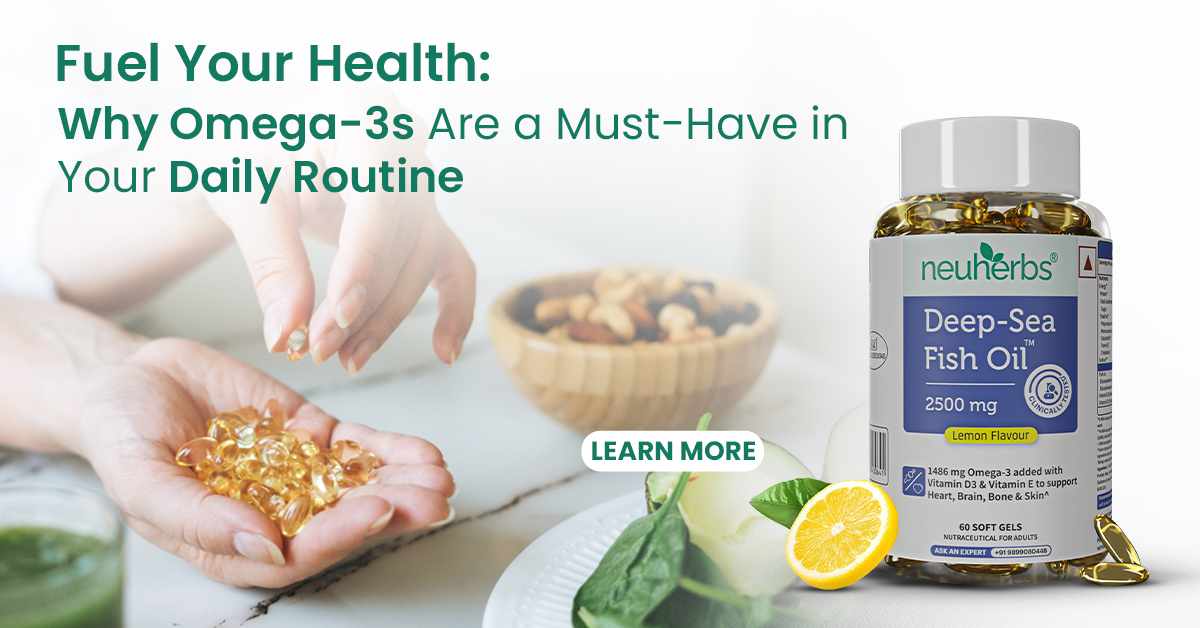
neuherbs Deep Sea Fish Oil Lemon Flavour checks all of these boxes. Sourced from Pacific Ocean sardines and anchovies, it delivers 2500mg of fish oil per serving with 1486mg of active omega-3s (EPA + DHA). It is molecularly distilled for purity, fortified with Vitamin D3 and Vitamin E, and comes in a lemon-flavoured softgel. It is FSSAI, ISO, India Organic, and Clean Label Project certified, and also one of the most reviewed omega-3 supplements in India. You can explore the full range of neuherbs’ supplements on their official website. They offer vegan algal oil (DHA+ EPA) capsules, flaxseed oil ALA capsules, and fish oil supplements in different sizes and dosages for different health concerns.
Why Should Women Consult a Healthcare Expert Before Taking Supplements?
While omega-3 supplements benefits are scientifically validated and products are generally safe, the right dose and formula depend on your health condition, existing medications, and age or life stage. If you are pregnant, breastfeeding, preparing for surgery, under treatment, or on blood pressure medication, please speak to your doctor or a healthcare expert before starting omega-3s to avoid any kind of interaction. neuherbs offers free expert one-on-one, private consultation with certified and 6+ years experienced nutritionists to help you choose the best omega-3 supplements for your specific needs.
Having said that, you must remember that supplements aren’t magic pills, painkillers, or antibiotics. They need time to get into your cells and start working their way internally. So, give at least 12 weeks or 90 days before you judge the omega-3 benefits on women.
FAQs
Can women take omega-3 supplements every day?
Yes, daily omega-3 supplements from neuherbs are safe for most healthy adult women. But women who are pregnant, breastfeeding, or on blood pressure or blood-thinning medications should consult a doctor first to determine the right dose.
What are the signs that an Indian woman might be omega-3 deficient?
Common signs include dry or dull skin, brittle nails and hair, frequent mood dips or brain fog, poor concentration, joint stiffness, painful or irregular periods, dry hair, and persistent fatigue. These signs can overlap with other deficiencies, so a blood test is the most reliable way to confirm.
Is plant-based omega-3 enough, or do women need fish oil?
Plant sources like flaxseeds, chia, and walnuts provide ALA, which the body converts into EPA and DHA in limited quantities, typically, under 10%. For most women, this conversion is not enough to meet their daily omega-3 requirement, especially during pregnancy or menopause. Fish oil supplements provide EPA and DHA in ready-to-use form, making them the more effective option for most people. If you are a vegetarian or vegan, there are algae-based omega-3 supplements that also deliver DHA directly. Speak to a neuherbs wellness expert to find the best option for your diet.




Write a comment ...